
Conversely, if a company repays its debt, it may decrease its liabilities, which could increase its equity. It’s a highly regulated industry that makes large investments typically at a stable rate of return, generating a steady income stream, so utilities borrow heavily and relatively cheaply. High leverage ratios in slow-growth industries with stable income represent an efficient use of capital. Companies in the consumer staples sector tend to have high D/E Accounting Security ratios for similar reasons. Changes in long-term debt and assets tend to affect the D/E ratio the most because the numbers tend to be larger than for short-term debt and short-term assets. Investors can use other ratios if they want to evaluate a company’s short-term leverage and its ability to meet debt obligations that must be paid over a year or less.

Formula to Calculate Total Equity of a Company
Equity refers to the residual interest in the assets of a company after deducting its liabilities. It represents the ownership claim on the company’s assets and can be considered as the value that the owners or shareholders have invested in the business. Equity plays a crucial role in determining the financial stability and value of a company. A balance sheet is a financial statement that provides a snapshot of a company’s financial position at a specific retained earnings balance sheet point in time.
Assets, Liabilities, and Equity on a Balance Sheet
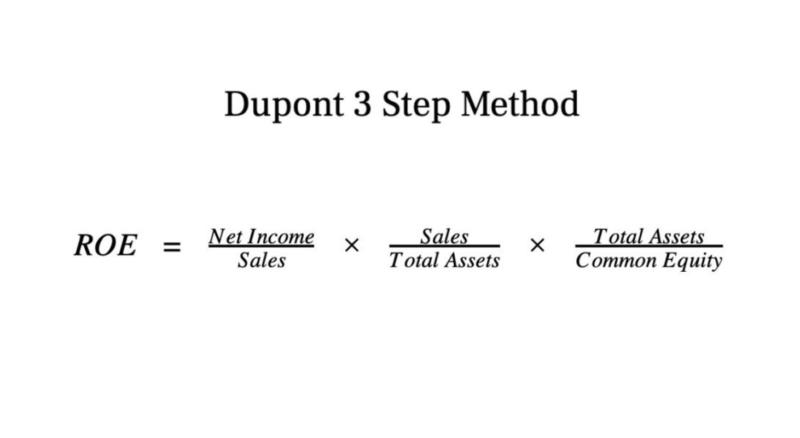
That changes your total equity to just $15,000, dropping your home equity percentage to 6%. As noted above, your home equity how to calculate total equity value is the difference between the current market value of your home and the total sum of debts registered against it. P&G’s ROE was below the average ROE for the consumer goods sector of 24.64% at that time.
Average Equity Formula
- To calculate the shareholders’ equity account, our model assumes that the only liabilities are the total debt, so the equity is equal to total assets subtracted by total debt.
- Finally, sum the present values of dividends and the present value of the terminal value to calculate the company’s net present value per share.
- Changes in long-term debt and assets tend to affect the D/E ratio the most because the numbers tend to be larger than for short-term debt and short-term assets.
- The D/E ratio is an important metric in corporate finance because it’s a measure of the degree to which a company is financing its operations with debt rather than its own resources.
- The market value of real estate and equipment is also somewhat of an estimate.
- If you understand equity, you’ll feel confident bringing in outside investors, working with business partners, and understanding how much your “share” of the business is actually worth.
- Treasury shares or stock (not to be confused with U.S. Treasury bills) represent stock that the company has bought back from existing shareholders.
If you were to calculate their return on equity for the period using just the second quarter’s $1.5 million number, ROE would appear lower than the company’s actual performance. If one were to calculate return on equity in this scenario when profits are positive, they would arrive at a negative ROE. It could indicate that a company is actually not making any profits, running at a loss because if a company was operating at a loss and had positive shareholder equity, the ROE would also be negative. The equity equation is important because it provides a clear and concise way to determine the value of a company’s equity. It helps in assessing the financial condition of a company and provides insights into its financial performance.
- Sam has $75,000 worth of equity in the home or $175,000 (asset total) – $100,000 (liability total).
- A particularly low D/E ratio might be a negative sign, suggesting that the company isn’t taking advantage of debt financing and its tax advantages.
- Treasury stocks are repurchased shares of the company that are held for potential resale to investors.
- A company’s ability to service long-term debt will depend on its long-term business prospects which are less certain.
- Long-term liabilities are any debts or other obligations due for repayment later than one year in advance, such as leases, bonds payable and pension obligations.
- Shareholders’ equity includes preferred stock, common stock, retained earnings, and accumulated other comprehensive income.
- A company’s equity is the difference between its total assets and total liabilities.
While the above definition provides a quick snapshot of total equity, let’s delve into a more detailed discussion. Total equity, often referred to as shareholders’ equity or stockholders’ equity, is a measure of a company’s net value. It is the amount of money that would be left if a company sold all of its assets and paid off all of its liabilities. If shareholders’ equity is positive, that indicates the company has enough assets to cover its liabilities. But if it’s negative, that means its debt and debt-like obligations outnumber its assets.